
Artificial Intelligence is reshaping the global workforce — but not all careers are equally vulnerable.
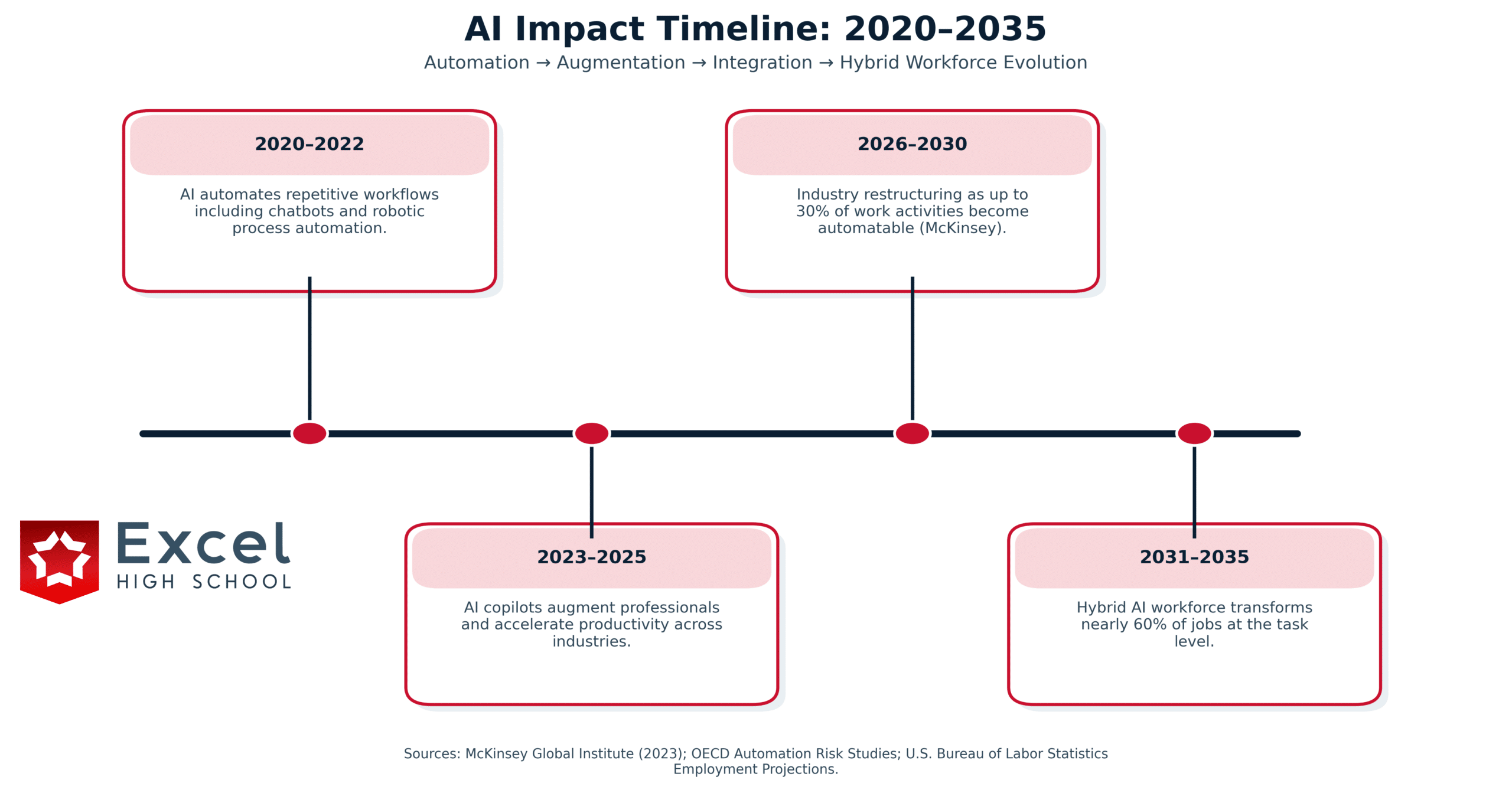
According to research from McKinsey Global Institute, up to 30% of current U.S. work activities could be automated by 2030, yet most occupations will not disappear entirely. Instead, automation affects specific tasks — particularly repetitive and rule-based work.
At the same time, data from the OECD and the U.S. Bureau of Labor Statistics show that careers requiring:
- Advanced human judgment
- Emotional intelligence
- Leadership and accountability
- Complex physical skill
- Ethical decision-making
- Creative strategy
remain among the lowest-risk for AI displacement.
In fact, automation risk models analyzing hundreds of occupations consistently rank healthcare providers, educators, skilled trades professionals, executives, and safety-critical roles among the most resilient career paths heading into 2026 and beyond.
The future is not about avoiding AI.
It is about choosing careers that leverage what AI cannot replicate.
🧠 Healthcare & Therapy (High Human Interaction)
- Psychiatrist
- Clinical Psychologist
- Marriage & Family Therapist
- Licensed Professional Counselor
- Social Worker
- Occupational Therapist
- Physical Therapist
- Speech-Language Pathologist
- Registered Nurse (hands-on clinical roles)
- Nurse Practitioner
- Pediatrician
- Geriatrician
- Palliative Care Physician
- Surgeon (complex procedures)
- Anesthesiologist
- Dentist
- Dental Hygienist
- Chiropractor
- Midwife
- Paramedic / EMT
🏫 Education & Human Development
- Special Education Teacher
- Early Childhood Educator
- School Counselor
- School Principal
- College Professor (applied disciplines)
- Athletic Coach
- Corporate Trainer
- Instructional Designer (strategic level)
- Academic Advisor
- Youth Program Director
⚖️ Legal, Governance & Ethics
- Judge
- Trial Attorney
- Public Defender
- Mediator
- Compliance Officer
- Ethics Officer
- Legislator
- Diplomat
- Policy Analyst
- Regulatory Affairs Director
🔧 Skilled Trades (High Physical Variability)
- Electrician
- Plumber
- HVAC Technician
- Elevator Installer/Repairer
- Construction Site Supervisor
- Carpenter (custom)
- Heavy Equipment Mechanic
- Aircraft Mechanic
- Wind Turbine Technician
- Solar Installation Technician
🛠 Skilled Craft & Technical Services
- Master Auto Technician
- Industrial Machinery Mechanic
- Tool & Die Maker
- Robotics Maintenance Specialist
- Marine Mechanic
- Power Plant Operator
- Firefighter
- Police Officer
- Emergency Management Director
- Building Inspector
🎨 Creative & Strategic Roles
- Creative Director
- Brand Strategist
- Film Director
- Producer
- Choreographer
- Interior Designer (custom projects)
- UX Researcher
- Organizational Development Consultant
- Executive Coach
- Leadership Consultant
💼 Executive & High-Level Leadership
- CEO
- COO
- CFO
- Entrepreneur (Founder)
- Venture Capitalist
- Board Director
- Nonprofit Executive Director
- School Superintendent
- Strategic Partnerships Director
- Change Management Director
🧑🤝🧑 High-Touch Personal Services
- Hair Stylist
- Barber
- Personal Trainer
- Physical Rehabilitation Specialist
- Event Planner
- Funeral Director
- Luxury Travel Advisor
- Personal Chef
- Childcare Provider
- Elder Care Provider
🔬 Science & Advanced Technical Roles
- Biomedical Engineer (research)
- AI Research Scientist
- Cybersecurity Architect
- Information Security Analyst
- Environmental Scientist (field-based)
- Geologist
- Aerospace Engineer (R&D)
- Climate Adaptation Specialist
- Forensic Scientist
- Systems Architect (complex enterprise systems)
Final Thoughts: Preparing for a Human + AI Future
Artificial intelligence will continue to reshape industries, redefine workflows, and automate repetitive tasks. But the data is clear: the future of work is not about humans versus machines — it is about humans working alongside intelligent technology. Consider taking an online course in AI prompt engineering.
Careers with the lowest risk of automation share a common foundation: they depend on judgment, empathy, leadership, skilled expertise, creativity, and ethical responsibility. These are not traits that algorithms can easily replicate. They are distinctly human strengths.
The goal for students in 2026 and beyond is not to avoid AI — it is to become AI-literate, AI-adaptable, and strategically positioned in careers that leverage both technology and human capability.
At Excel High School, preparing students for the future means helping them understand where opportunity is expanding, where disruption is likely, and how to build the skills that endure. Whether pursuing healthcare, skilled trades, STEM, education, business leadership, or high-touch service professions, the most resilient pathways combine technical fluency with human intelligence.
The workforce of 2035 will belong to those who can:
Think critically
Lead confidently
Adapt quickly
Communicate effectively
And use AI as a tool — not a replacement
The future is not uncertain. It is evolving.
And students who build uniquely human strengths today will thrive in the AI-powered economy of tomorrow.